

The statistic keeps circulating: people under 35 drink less wine, care less about it, buy less of it. The conclusion we draw, almost reflexively, is always the same. It’s the young people’s fault.
It’s a comfortable explanation. It spares everyone else the trouble of looking in the mirror.
The Wrong Trial
Blaming a generation for losing interest ignores what it actually consumes. Natural wine is booming. Independent wine shops that talk about wine differently — no jargon, no hierarchy, no ceremony — are filling their stores with 25-to-35-year-olds. So the problem isn’t interest. It’s format.
What this generation is rejecting isn’t wine. It’s the way wine gets presented to them: an unreadable list, closed-off vocabulary, a ritual that feels more like an exam than a pleasure. Faced with that, they check out. Understandably.
The Real Culprit: A Chain That Never Moved
The wine industry spent decades building a language, a set of codes, a hierarchy of prestige. That language worked for generations who absorbed it through family tradition or aspirational status-seeking. It stopped working for a generation that grew up with Wine Folly, Instagram, and wine shops that explain a pairing in three plain sentences.
Producers haven’t adapted their messaging. Many still sell an origin, a vintage, a medal — when their new buyer wants to understand a flavor, a story, an intention. The problem isn’t the product. It’s the missing translation.
The Restaurant: The Forgotten Link
Between the producer and the customer sits an actor with disproportionate — and badly underused — power: the restaurant. That’s where the entire question of transmission gets settled, in a single order.
Yet the classic wine list — bound, dense, ranked by ascending price — is exactly the format that intimidates a young clientele the most. It demands prior expertise just to be decoded. It punishes anyone who doesn’t already speak the language.
This is a design problem, not an inevitability. A list can inform without judging. It can explain a flavor profile, place an origin, suggest a pairing, without assuming the customer already knows the codes. The sommelier has always done this work out loud. The question is: why has the written format never done that same work in their place?
What a Digital List Actually Changes
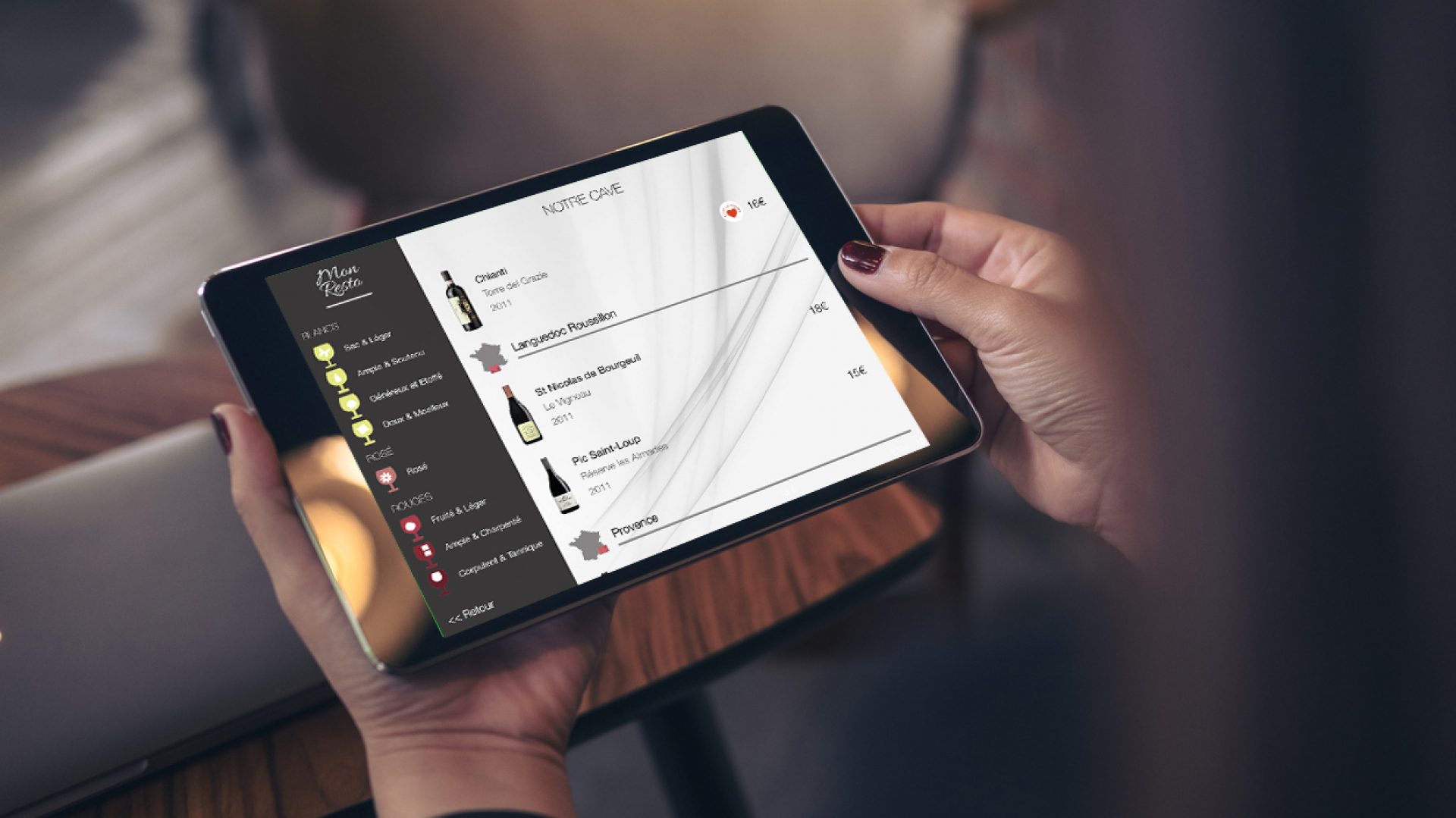
An iPad wine list isn’t a modernity gadget. It’s a shift in logic. It lets you show a bottle before selling it — a photo, a winemaker’s story, a tasting note in plain language instead of jargon. It lets people filter by flavor profile instead of region or price, which matches exactly how a young consumer thinks about wine today.
It also removes the social pressure of the classic ritual. Browsing a screen alone, at your own pace, without having to flag down a sommelier you’re afraid of bothering or misunderstanding, removes a real psychological barrier — especially for a generation that would rather look something up itself before starting a conversation about it.
This isn’t about replacing the sommelier. It’s about giving them a silent first relay, one that sets up the conversation instead of replacing it.
A Question of Translation, Not Generation
Wine isn’t dead among young people. The language used to sell it to them is.
The industry doesn’t need to win back a generation that’s turned its back on wine. It needs to re-translate what it has always known how to do — telling the story of an origin, a gesture, a flavor — into a format this generation can actually read. The restaurant is where that translation can happen first, before the customer has even decided whether they like wine or not.
This isn’t about saving the industry. It’s about no longer speaking to it in a language it no longer understands.