
Sébastien Périé, Restaurant Director, L’Atelier Windsor — Luxembourg
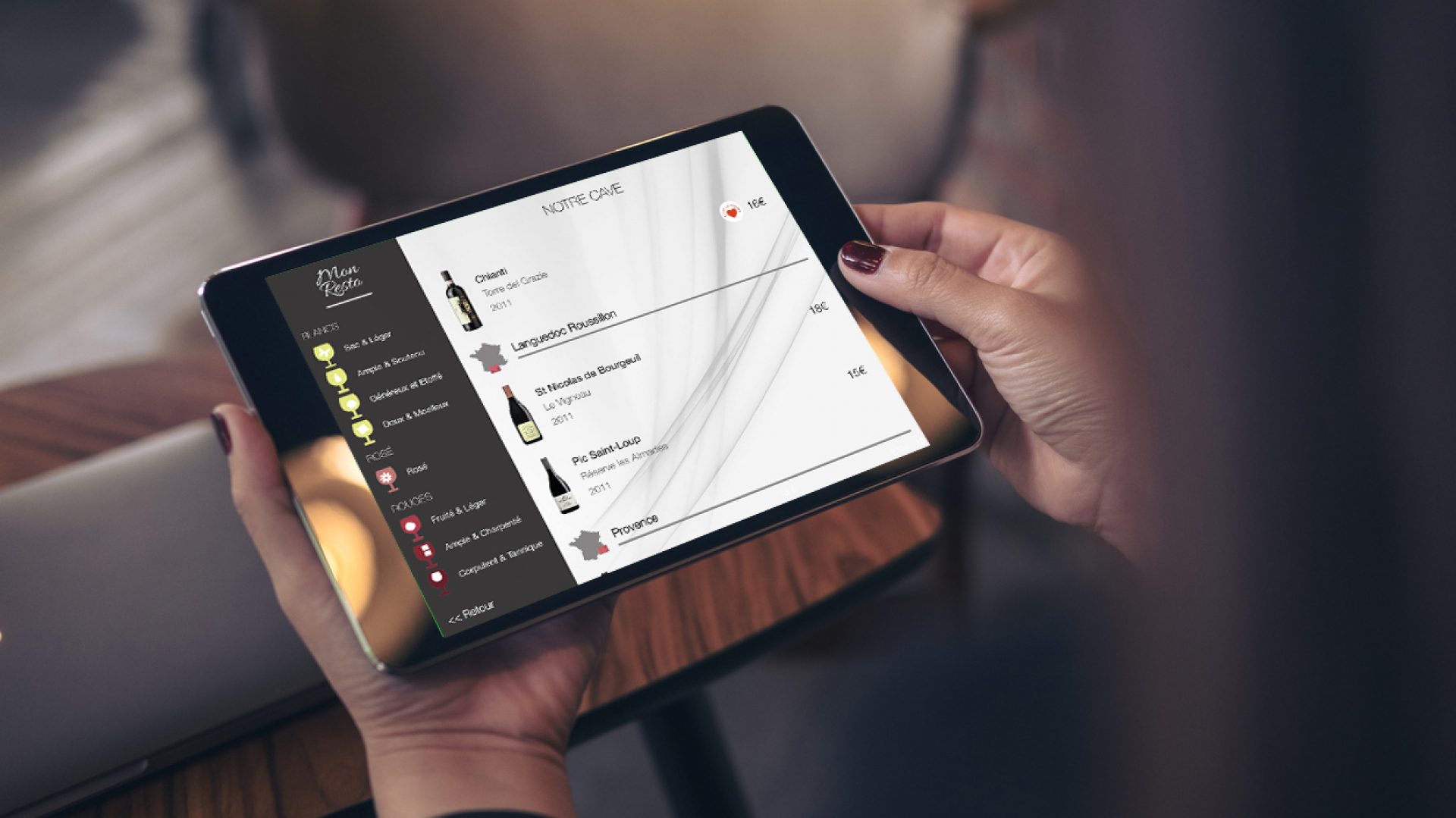
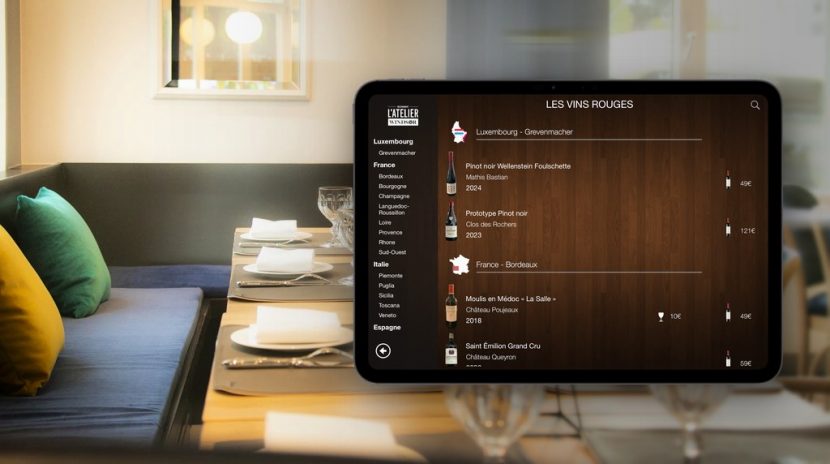
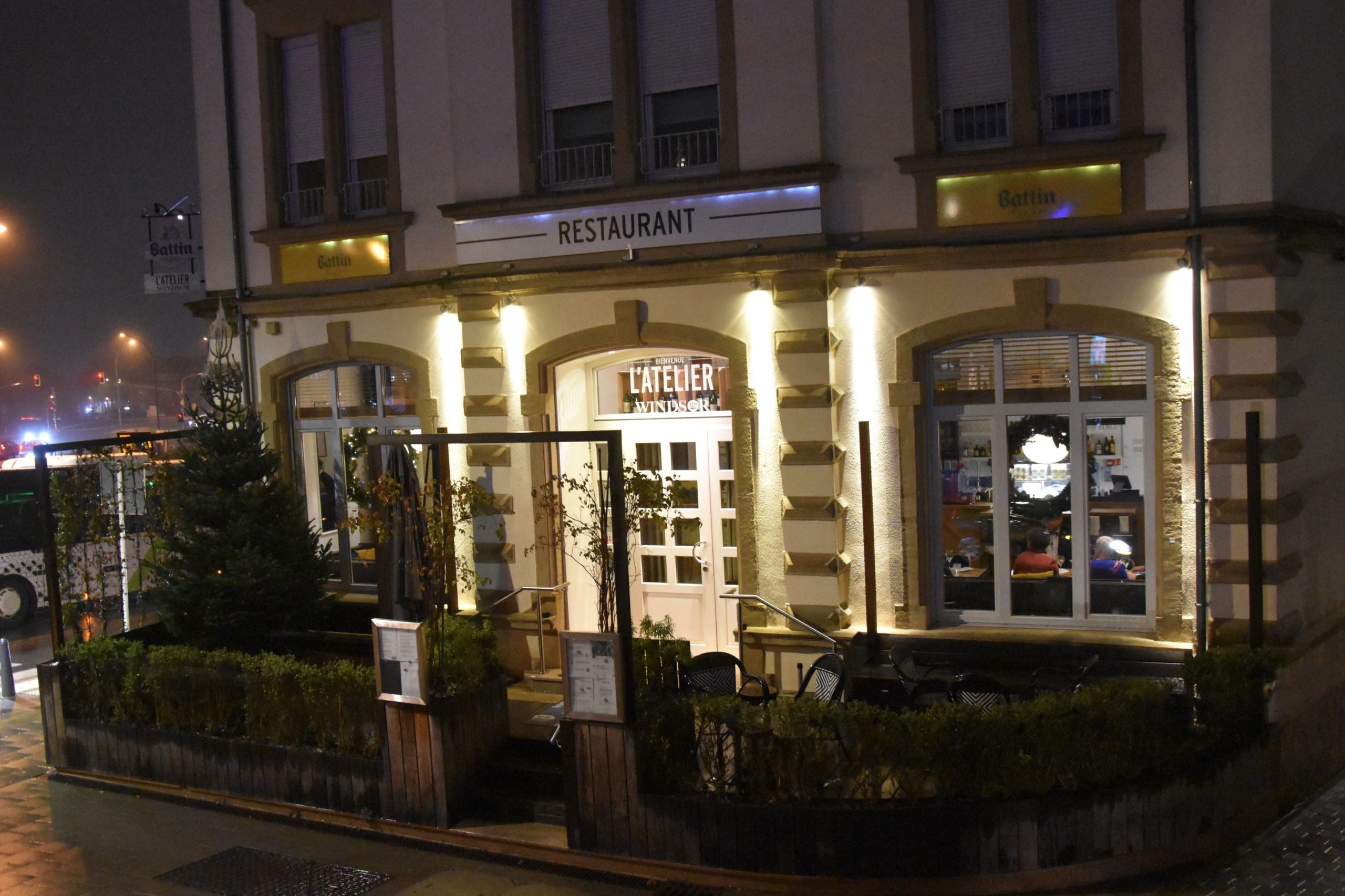
L’Atelier Windsor is an auberge in Luxembourg City — thirty-odd covers, cooking Sébastien Périé calls “unplugged”: classical, precise, rooted in Escoffier, executed without shortcuts. When the restaurant opened in 2019, Sébastien made one decision that surprised a few people. There would be no paper wine list. Only iPads.
Seven years on, he has no doubts.
Who is Sébastien Périé?
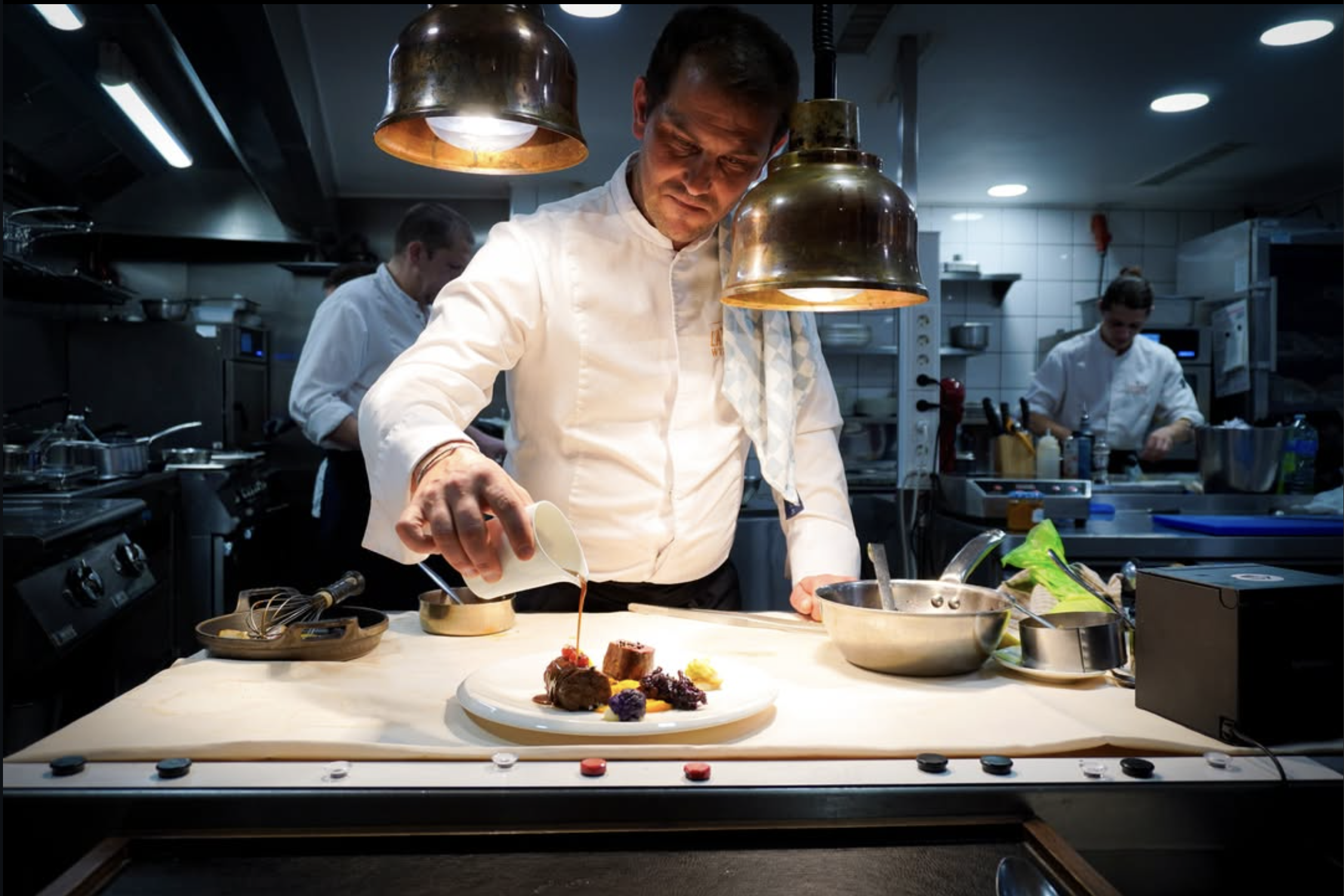
Sébastien grew up in the industry. Son of a restaurateur, grandson of a restaurateur, he trained at Paul Bocuse and with Jean-Luc Rabanel, travelled widely, and arrived at L’Atelier Windsor with a career spanning both the cellar and the dining room. He is a trained sommelier and a maître d’hôtel, from a family of cooks. His view of the profession is unusually complete.
It also makes him unusually blunt about where the trade is heading.
“I’m tired of hearing excuses. People don’t drink wine any more, people this, people that. We can’t be passive. We need tools that let us be reactive, proactive, all the time. The sommelier’s job is sales. Pure and simple. Passionate sales, yes. But sales.”
His concern is that the sommelier has drifted to the margins — kept alive at starred restaurants and quietly dropped everywhere else. He wants the role back at the centre of the ordinary restaurant, and he thinks the tools are what will put it there.
Why digital, and why from day one?
Opening with COENA was not a reaction to a problem. It was a conviction.
“For me it was obvious that a restaurant opening in 2019 opened with tablets. Even though we’re an auberge and you’re eating Escoffier’s dishes, I couldn’t have opened with any other kind of wine list.”
He had spent years watching what paper demanded: someone constantly updating the list, reprinting a whole sheet because one bottle sold out, scrambling to reflect a new vintage before the next service. At his pace — moving fast, tasting constantly, rotating small growers — paper simply was not viable.
“I was nearly at the point of hiring someone just to redo the wine list every week. Now I go at my own speed. I taste something, I like it, it goes on. ‘Seb, I’ve sold the last bottle of so-and-so’ — click, it’s off the list. Not tomorrow morning. The next table to sit down gets an updated list. It took me twelve seconds.”
He points out what that actually replaces. A single sold-out bottle used to mean reprinting the page it sat on — and on a folded A4 or A3, that means reprinting the list.
The resistance, and how it resolved
Not everyone arrived ready to embrace a screen. A generation of guests — Sébastien puts them in the 50 to 70 bracket — pushed back at first. Some wanted paper alongside the iPad. A few were vocal about it.
“We asked ourselves whether we should print a paper version too. And I said no. We made a choice, and you have to own the choice. So now it’s on us to be a little smarter.”
What resolved it, he says, was not the technology. It was the sommelier.
“I remember being twenty-three, a young sommelier, handed a list that ran to 250 pages. I thought: where do I even go? What do I do? So I followed the price list, because at least that was something to hold on to. With a tablet you don’t hand someone 250 pages and walk away. You stay. You say: press here, swipe this way, this is the tasting profile section. You accompany them. That is what the sommelier is for.”
He is also clear that the software has to earn that. “I needed something intuitive. Something that says: go here, press this button, it’ll be fine. Something reassuring. That’s what I found.”
What changed for the team
One of the effects Sébastien values most is what the iPad does for young staff.
“I’m still a bit of a dinosaur — I had to make an effort to get on it. But a twenty-two-year-old? This is their world. They do their shopping on it, they do everything on it. Hand them a tablet as their work tool and they’re at home immediately.”
During the afternoon break he watches his team teach themselves — browsing profiles, exploring regions, building familiarity with the cellar before service starts.
“When they tell me at the end of a shift, I love working with this thing, I feel comfortable, I can pull up any wine profile in seconds — that’s when you know it’s worked. Then they come and ask me for more on the producer. There’s a desire to learn. A desire to grow.”
The Cheval Blanc moment
Ask Sébastien about return on investment and he pauses. He is careful to separate what the tablet does from what the sommelier does.
“You’ll notice I’ve barely mentioned money. Yes, the restaurant is profitable. But I can’t quantify it, because I’ve always sold wine. It isn’t the tablet that does everything.”
Then he tells the story anyway. Not long before we spoke, he had two bottles of Cheval Blanc in the cellar.
“I handed over the list and he dug. He went to Bordeaux, he was curious, Grand Cru — and there it was. ‘Oh darling, we’re celebrating today.’ Maybe he’d have found it on a paper list. But maybe he’d have stopped looking before he got there.”
He believes the digital format changes browsing in a way that favours discovery. A guest who would flip through five pages of a printed list will navigate for ten minutes on an iPad without noticing. Roughly two hundred references, he says, and a guest can take them in without turning fifty pages of a heavy book.
“It’s that kind of detail that makes a real difference for me. Bottles I might not otherwise have sold.”
On the future of the profession
Sébastien talks about the sommelier’s future with both urgency and optimism. His framework is three things in balance: ancestral know-how, technical skill, and AI — held together by what he keeps calling love, meaning passion, hospitality and the instinct to share.
He also has a word he refuses to use.
“I hate the word ‘revisit’. Your wine list doesn’t revisit anything at all. There’s still the vintage, the appellation, the producer’s name, a short description, the grape. Nothing has been reinvented. It’s just been put on a modern support. My recipes are one hundred percent the ones Monsieur Escoffier made. They’re presented the same way. They’re just done properly.”
He is enthusiastic about the AI-assisted label recognition COENA introduced — photograph a bottle, get an instant reading of the label with suggested tasting notes — and sees it as a recalibration of where sommeliers spend their energy. He is equally clear that it stays a suggestion.
“I still have to check it. That’s our job. But my work can go back to the essentials. Meeting suppliers, meeting growers, putting this or that wine forward, training young staff to sell, and selling the wine. I’m not spending all my hours redoing my notes — even though I love doing that. I can compare mine against the AI and give feedback back.”
The same logic, he argues, is what could put wine back on the table in houses that never thought of themselves as wine restaurants — an eighty-seat place that never wanted the reputation or the payroll of a starred cellar can now put a wine list in front of a guest that actually works.
With one caveat he delivers flatly: the selection is still yours. Software will not save a badly chosen list.
“The restaurateur has to take back responsibility. You choose the beef fillet you serve. You choose the wine you put on the table. Don’t let yourself be press-ganged by wine reps from every direction. Choose your suppliers. And that’s the strange thing — taken the right way, AI puts our profession back at the centre. Because you can’t let it run wherever it likes. You come back to the basics, and the basics since 1900 are: choose well, cook well, serve well. Choose the wine well and serve it at the right temperature. We’re agreed the tablet won’t bring it to the right temperature. Not yet.”
What he would tell a restaurateur who is still hesitating
“Open your mind. That’s the first thing, and it’s essential, because we don’t have a choice any more. I resisted for a long time myself.
The tablet brings ease of cellar management, it brings interest, it brings fun — because yes, it is also fun. It’s an investment up front, but it pays for itself. For us it was done by year three. Protect your tablets.
Paper is finished. People tell me there’s a server running behind all this, so what about the planet. No. Paper is finished. I need trees in the forest, and I’d rather the wood went to ageing wine than to printing a list.
Whether you’re thirty covers like us or a two-hundred-seat brasserie — and I could absolutely see it at two hundred — whether you’re making sausage and mash with love every day or plating three-Michelin-star precision with tweezers, there’s something in it for everyone. You need to make the move.
Sometimes I want to tell people not to, so I stay the only one and take all the credit. But no. Go. Go for a thousand reasons.”
L’Atelier Windsor is in Luxembourg City — atelierwindsor.lu. COENA is a digital wine list and beverage management platform for restaurants and hotels. coena.fr