

A fair comparison of two tools that look alike on a feature list and behave nothing alike on the floor.
Every few months a sommelier tells us the same thing: “I’ve been looking at two or three of these, and honestly they all seem to do the same stuff.” It’s a reasonable thing to say. Read the feature bullets of any sommelier software and you’ll find inventory, stock counts, a wine list, some kind of integration, and a mention of AI.
Then you put them on a pass during a full service and the resemblance evaporates.
Vinify, the Oslo-based platform that has become well known across the Nordics, is one of the tools that comes up most often in those conversations. So rather than pretend the comparison isn’t happening, here is an honest reading of what each product is built to do — including the things Vinify does better than we do.
The question behind the question
Before comparing features, it’s worth deciding which problem is actually costing you money.
There are two, and they are not the same problem.
The first is the ledger problem. Nobody knows what’s really in the cellar. The count is a spreadsheet somebody updates on Mondays. Bottles disappear. Purchasing is guesswork, and at inventory time the whole team loses a day.
The second is the service problem. The list is eighteen months out of date, four wines on it are gone, the printer costs a fortune every time you change a producer, half your guests can’t read the tasting notes because they aren’t written in their language, and when your head sommelier is off, the wine part of the meal quietly becomes a transaction instead of a conversation.
Vinify is built for the first problem. COENA is built for the second. Almost every difference between the two products falls out of that.
Vinify: wine cellar management software, done well
Vinify started from a founder’s observation that restaurants were still running their cellars in Excel, and the product is a direct, well-executed answer to that. It’s wine cellar management software in the classic sense: nested locations down to the shelf, by-the-glass tracked in centilitres, barcode and invoice scanning, bulk import from spreadsheets, PDFs and even photographs matched against a large wine database, two-way sync with a set of point-of-sale systems, and analytics with margin and profit reporting.
Two things deserve genuine credit.
One is market valuation: Vinify pulls Liv-ex pricing on tens of thousands of wines and refreshes it daily, so you can watch what your cellar is worth over time. That’s a real feature, and it’s one we don’t offer today. If your cellar holds investment-grade bottles and your owner or CFO asks what they’re worth, that question has an answer in Vinify and doesn’t in COENA.
The other is how easy it is to start. Prices are on the website, there’s a free trial, and you can be importing your cellar the same evening without speaking to anyone. That’s a genuinely good buying experience, and it is the reason the product spreads.
From that cellar, Vinify then produces a wine list: a print-ready PDF, or a QR-code menu the guest opens on their own phone.
That last sentence is where the two products separate.
What a wine list is for
At a certain level of dining, the wine list isn’t a document. It’s an object that gets handed across a table, and the handover is part of the service.
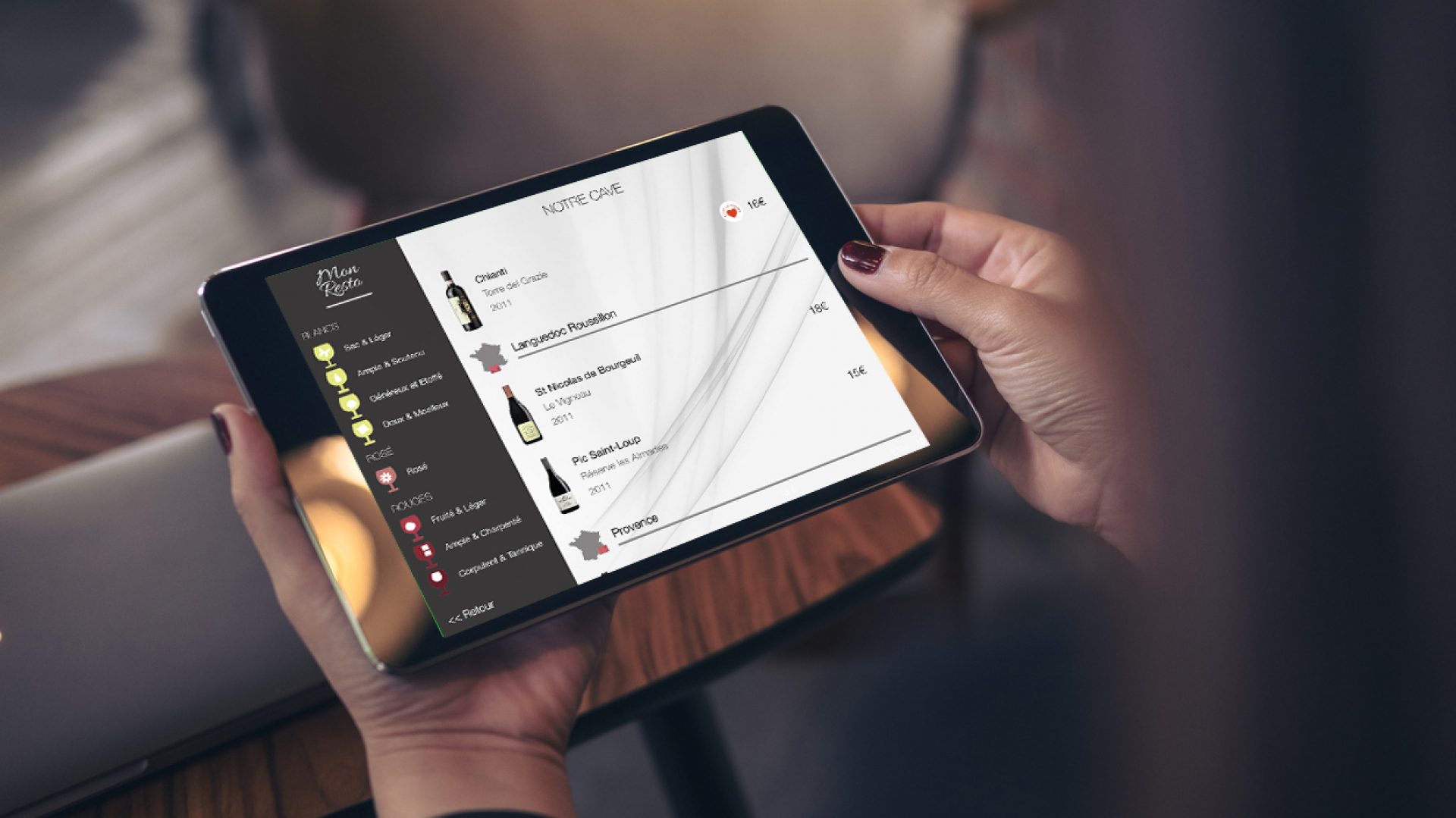
COENA is built around that moment. The iPad wine list runs as a native app on a device the guest actually holds. They move through it by colour, by region, by tasting profile, by what they’re eating; they see the producer, the plot, the map, the bottle itself. The sommelier drives the same device during service — opening a bottle, pouring a glass, adding a wine to the by-the-glass selection — and the stock behind the list changes in the same second. A wine that has just sold out stops being offered before anyone can order it.
Three consequences matter more than any feature bullet:
It works with no internet. The list is stored on the device; a connection is only needed when you edit. Stone cellars, thick-walled dining rooms, remote properties, boats — the list is there regardless. A cloud product with a QR menu has a different answer to that question.
It speaks your guests’ languages. COENA runs in six languages, with tasting notes generated in each. If your dining room is international, this is not a nice-to-have — it’s the difference between a guest ordering confidently and ordering the second-cheapest bottle.
It covers the whole drinks programme. Wine, cocktails, spirits, and food menus live on the same device, with the same real-time stock behind them.
And the ledger problem doesn’t disappear: BIN management, multi-cellar, movements in and out, breakage, and an AI cellar assistant you can simply ask how many bottles of that Barolo did we sell last month? — in plain language, from the iPad.
Five questions that settle it faster than a demo
- Who is the tool for — your team, or your guests? If the honest answer is “my team, at inventory time,” a cellar platform may be all you need.
- What happens when the connection drops mid-service? Ask specifically. The answers differ sharply.
- What languages do your guests read? Count them across a season, not a night.
- How many cellars, bars or properties will be in the account? Some platforms handle exactly one.
- Do you need a market valuation of the cellar? If yes, say so early — it changes the shortlist.
The honest conclusion
If your problem is that nobody knows what’s in the cellar and you want that fixed cheaply this week, a cellar management platform like Vinify is a sound choice, and you should take the free trial.
If your problem is that the wine list itself is no longer doing its job — out of date, mono-lingual, expensive to print, and dependent on one person being on shift — then you’re not shopping for a spreadsheet replacement. You’re shopping for the object in the guest’s hands, and the cellar management has to come attached to it rather than the other way around.
That’s the product we’ve built, in rooms from Le Pont de Brent to La Table des Merville to Royal Mansour Marrakech. If you’d like to see it against your own list, we can have a working version of your cellar on an iPad within 48 hours.
Sources: home.vinify.app, blog.vinify.app/about, COENA — Wine list on iPad. Product details as published in August 2026; features and pricing change, so check both sites before deciding.