
For the past few years, I’ve spent a lot of time inside restaurants — not as a guest, but listening to the people who make service happen. Restaurateurs, sommeliers, floor staff. Different countries, different concepts, different price points. And yet, the same conversations keep coming back.
Service is intense. Time is scarce. And wine, despite being one of the most emotional parts of the dining experience, is also one of the most complex to manage.
Wine requires knowledge, confidence, precision and timing — all at once. During a busy service, those requirements can quickly turn into friction. A bottle that’s no longer available. A wine that could be sold by the glass but isn’t activated. A question that would take ten seconds to answer… if the information were immediately accessible.
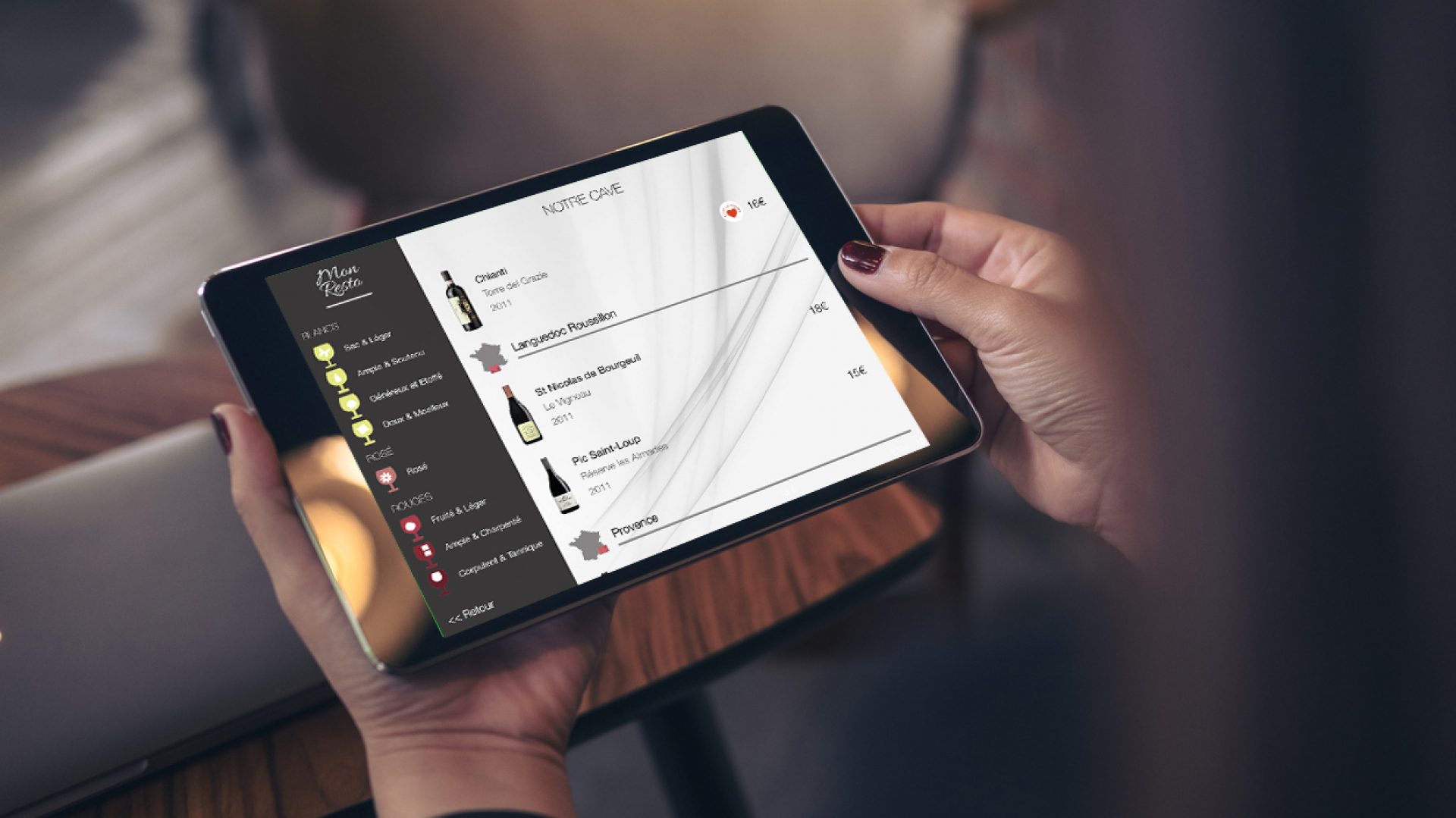
At COENA, everything started with a simple observation: the traditional wine list was no longer adapted to modern restaurants. Paper couldn’t keep up with stock changes, vintages, languages, or pricing. That’s why we built a digital wine list for iPad — something alive, connected, and easy to update.
The iPad turned out to be the right format for guests. It invites exploration, storytelling, and discovery. But over time, I realized something else: during service, the iPad isn’t always where the action is.
When a waiter stands at a table, even small interruptions matter. Walking back to the bar. Looking for the device. Asking a colleague. Each step slightly breaks the rhythm of hospitality.
That’s when I began thinking about smartwatches.
Not as a gadget. Not as a trend. But as a very natural extension of how restaurants already operate.
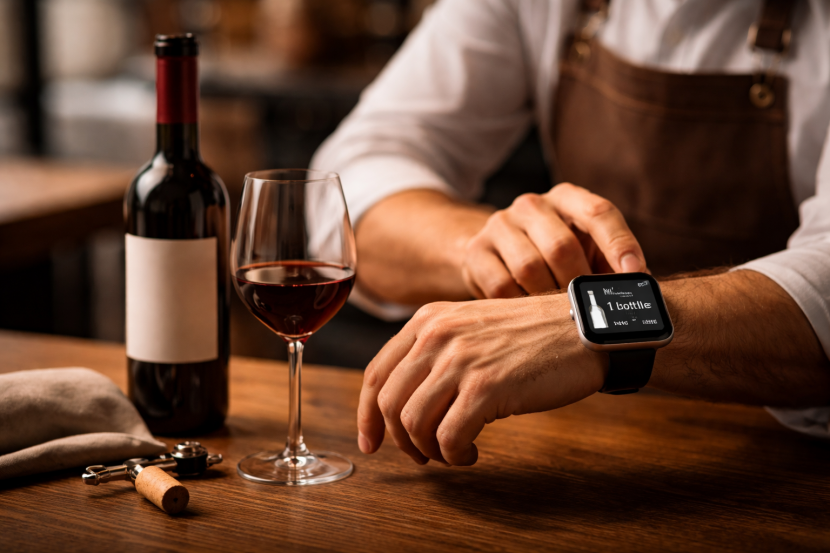
Many professionals already wear one. It’s always there, always connected, and discreet enough to disappear from view. It doesn’t pull attention away from the guest — it simply supports the person serving them.
I started imagining COENA not as a single interface, but as a shared system living across different moments of the restaurant. The iPad for guests. The phone for managers. And the watch for those fast, almost invisible interactions that happen dozens of times during a service.
Not to browse wine lists. Not to read tasting notes in depth. But to answer simple questions instantly. Is this wine still available? Can I open it by the glass? Do we have something similar? Is this the last bottle?
Small actions, repeated hundreds of times, are where service either flows — or slows down.
What excites me about wearables is not the technology itself, but what it allows: fewer screens between people. Less friction. More confidence for teams. More attention for guests.
Wine management shouldn’t feel administrative. Stock updates shouldn’t wait until the end of the night. Information shouldn’t live somewhere you have to search for — it should come to you at the right moment.
The wine list has already gone through several transformations. From paper to PDF. From QR codes to tablets. Each step brought it closer to real time.
I believe the next step is simply this: the wine list leaves the table and follows the team.
Not to replace sommeliers, and certainly not to automate hospitality. Wine will always be about emotion, storytelling and human connection. Technology should never compete with that — only protect it.
If COENA can help make service calmer, smoother, and more intuitive, then it’s doing its job.
And perhaps one day, the most powerful wine tool in a restaurant won’t be the one you see — but the one quietly sitting on the wrist of the person pouring the glass.